Best month
February
Budget
PremiumRegion
Europe
Duration
3 days
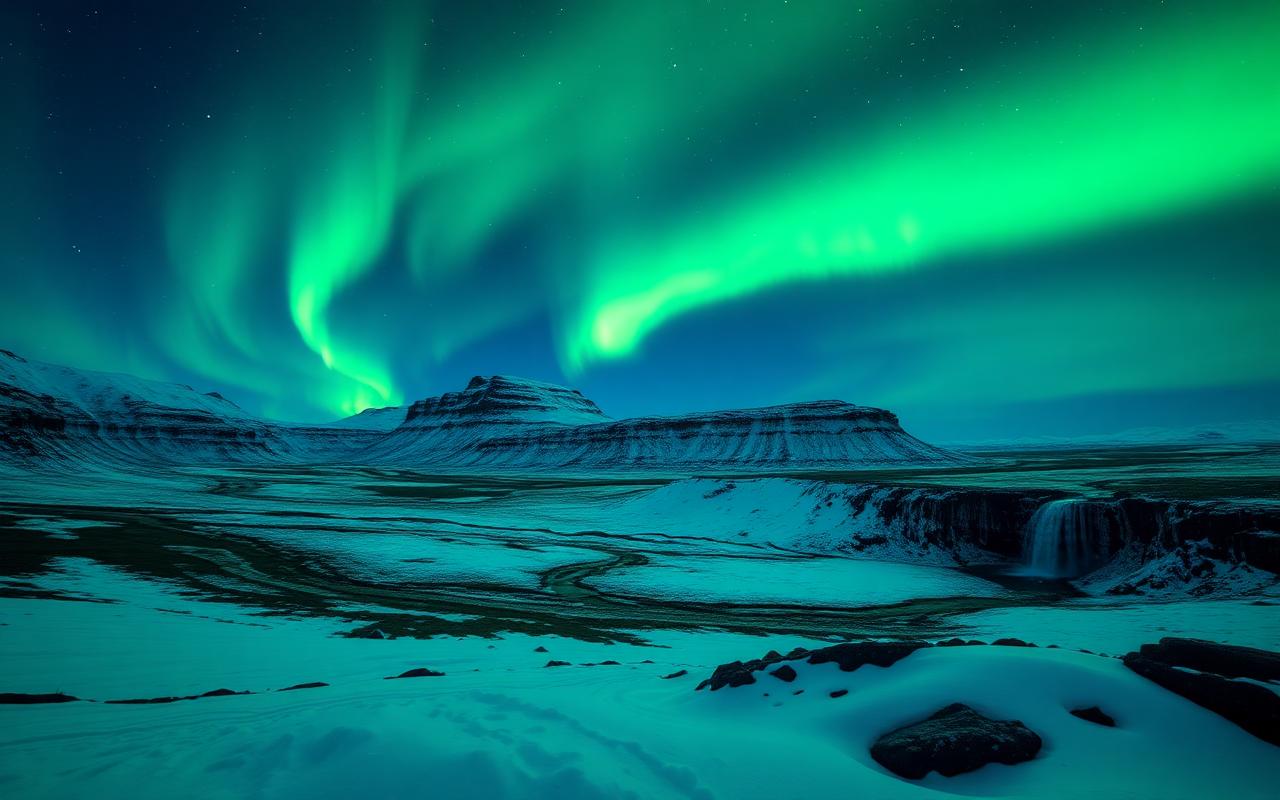
Northern lights flickering green over a black sand beach, geothermal pools steaming in minus 5, and roads where you go an hour without seeing another car. Iceland in winter is brutal and beautiful.
The destination, in context
Iceland in February is the version of the island that ends up framed on people's living-room walls: jet-black lava fields under crisp snow, half-frozen waterfalls, geothermal pools steaming in minus five, and skies that produce aurora often enough to feel like a recurring miracle. Daylight is short — about seven to nine hours — but the long blue hour and the painterly golden light make every photo work. Roads are open, prices are gentler than peak summer, and you'll have major sights almost to yourself outside the Reykjavik bubble.
History & culture
Iceland was settled by Norse and Celtic seafarers in the late 9th century, and the population is still tiny — under 400,000 — with a literature-to-people ratio that's the highest on Earth. The Sagas, written in the 13th century, describe the founding feuds and journeys with novelistic detail; you'll see their place names dotted across the south coast. Modern Iceland is fiercely creative: Reykjavik's design shops, music scene and food culture all punch wildly above the country's weight.
5 reasons to go here
- Northern lights, on a clear night, no filter needed
- Blue Lagoon at night, snow falling on your head
- Ice caves under Vatnajokull glacier
- Waterfalls half-frozen, looking unreal
- Reykjavik bars open till sunrise (which is late)
What to eat & drink
Iceland's food has finally outgrown its reputation for fermented shark. Lamb soup (kjötsúpa) is the national hug in a bowl. Try plokkfiskur (creamy fish stew) at Messinn in Reykjavik, langoustines at Humarhöfnin in Höfn on the east coast, and skyr — the thick yoghurt-cheese hybrid — at every breakfast. The hot dog at Bæjarins Beztu, beloved by Bill Clinton and most of Reykjavik, is genuinely worth the queue. Alcohol is taxed brutally — buy at the duty-free on arrival.
Suggested itinerary
Day 1
Land at Keflavik, drive straight to Blue Lagoon for the welcome you deserve. Stay in Reykjavik, dinner of lamb soup, early night to chase the lights.
Day 2
Golden Circle: Thingvellir, Geysir, Gullfoss. All covered in snow looks different than the postcards. Sleep on the south coast near Vik.
Day 3
Glacier hike or ice cave tour - book in advance, these sell out. Black sand beach at Reynisfjara, mind the sneaker waves, they're not joking about that warning.
When to go
February has the cleanest snow, the highest aurora frequency outside the equinoxes, and the price advantage over December and January. By March the days lengthen quickly. Storms are the only real wild card — check vedur.is and road.is every morning and don't try to outdrive a weather warning. The Northern Lights need a dark, clear sky and minimal moonlight; chase them with the aurora forecast on vedur.is.
Practical know-how
Rent a 4x4 with studded winter tires — anything less and you'll spin on the first sheet of black ice. Fuel up before any long drive; stations on the south coast can be 100km apart. Card payment is universal, even at remote campsite huts; cash is essentially optional. Pack proper layers — merino base, fleece, waterproof shell — and a swimsuit, you'll be hot-pot hopping. Tap water is among the purest on Earth, never buy bottled.
Driving in winter
Get a 4x4 with proper winter tyres. Roads close without warning, check road.is every morning before you set off. Don't push through a closed sign, ever. People die doing that.
Hidden gems & nearby
Skip the Blue Lagoon for the Sky Lagoon in Reykjavik — smaller crowds, infinity edge over the ocean, and a seven-step Nordic ritual that's the most relaxed you'll ever be. Drive east past Vík to the Fjaðrárgljúfur canyon for an otherworldly walk most south-coast itineraries skip.
Gallery
Ready to actually go?
Find a flight or pick another route to dream about.