Best month
June
Budget
BudgetRegion
Europe
Duration
2 days
A capital city you can cross on foot in 20 minutes, dragons on the bridges, and Lake Bled an hour away. Ljubljana is small, green, and quietly perfect.
The destination, in context
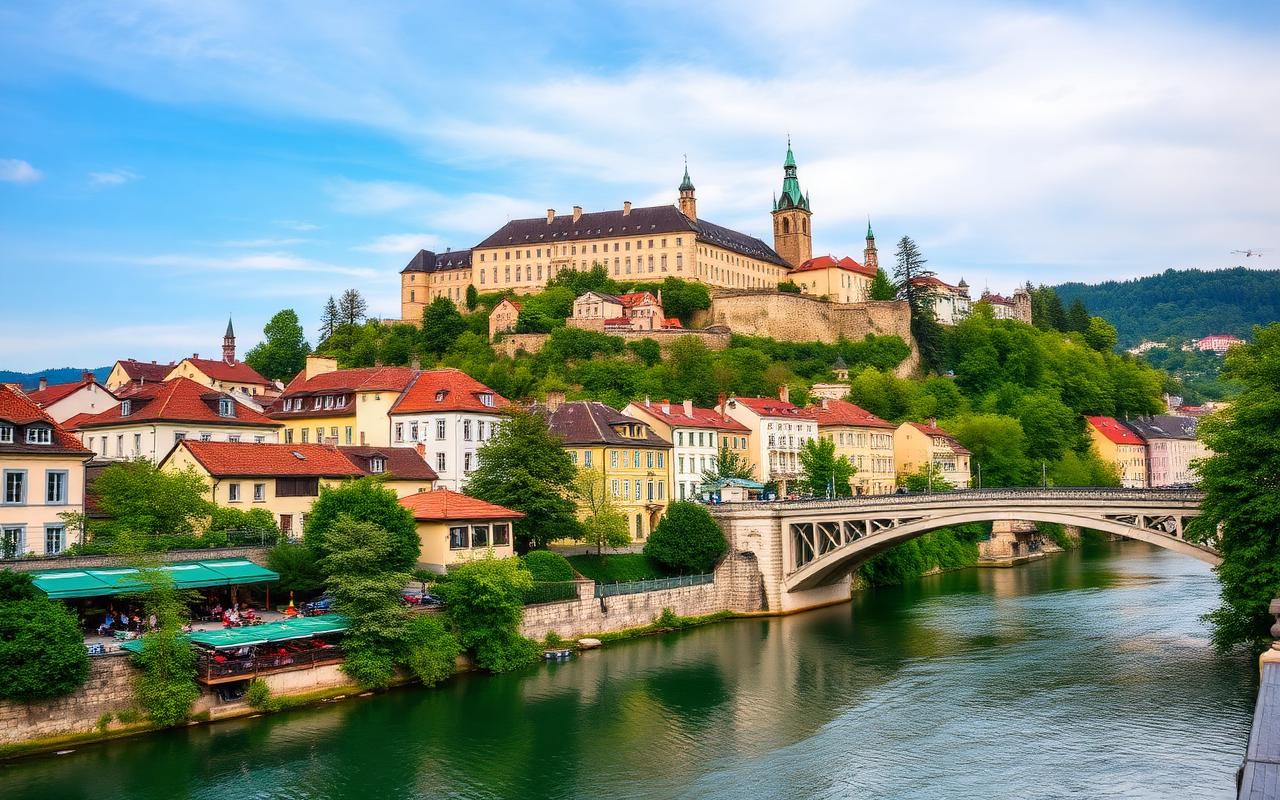
Ljubljana is a capital you can hug. Just 290,000 people, a car-free old town along the Ljubljanica river, a castle on a small hill at the centre, and somehow more cafés per square metre than anywhere outside Vienna. June is its best month: the riverside terraces are open until late, the surrounding forests are at peak green, Lake Bled and the Soča valley are an hour each direction, and the Tivoli park is fragrant with linden blossom. Slovenia in two days surprises everyone who lazily lumps it in with 'the Balkans'.
History & culture
Ljubljana was Roman Emona, then medieval Laibach under Habsburg rule, and was largely rebuilt by Jože Plečnik — the visionary architect whose Triple Bridge, Central Market and National and University Library define the modern city. Slovenia gained independence from Yugoslavia in 1991 with the shortest war in modern European history (ten days) and joined the EU and Eurozone in 2004 and 2007. The country is fiercely green — Ljubljana was European Green Capital in 2016 and most of the centre is pedestrian-only.
5 reasons to go here
- Pedestrian-only old town along the river
- Castle on the hill with a funicular for the lazy
- Lake Bled day trip, the cream cake is non-negotiable
- Tivoli park for a slow morning
- Cheap, friendly, English everywhere
What to eat & drink
Slovenian food sits at the crossroads of Italian, Austrian and Balkan influences. Try štruklji (rolled dumplings, sweet or savoury), žganci (buckwheat polenta with pork crackling), and idrijski žlikrofi (pasta parcels filled with potato and bacon). Open Kitchen on Friday at Pogačar Square is the city's outdoor food market with stalls from twenty restaurants. The wine scene is excellent and underrated — try Vipava valley whites and a Refošk red from the coast.
Suggested itinerary
Day 1
Walk along the Ljubljanica river, cross the Triple Bridge and the Dragon Bridge. Coffee at one of the riverside cafes. Funicular up to the castle for sunset, dinner in town after.
Day 2
Train to Bled, row a boat to the island, walk up to the cliff-top castle. Slice of kremsnita cream cake at Park Hotel. Back to Ljubljana for a slow last evening.
When to go
May to early October is ideal for the city plus day trips. June has the perfect balance of warmth and greenery. July and August can hit 32°C and the city centre empties as locals head to the coast or the mountains. December is enchanting with festive markets and ice rink at the castle, but most outdoor activities close.
Practical know-how
Ljubljana airport is small; bus or taxi reaches the centre in 25 minutes. Walking covers the whole city. Slovenia is in the EU, Schengen, and uses euros. Train and bus connections to Bled, Bohinj and the Adriatic coast are frequent and cheap. Renting a car for a day opens the Julian Alps; the Soča Valley is one of Europe's underrated drives.
Day trips
Slovenia is tiny, you can reach the Adriatic coast or the Julian Alps in two hours from Ljubljana. Renting a car for a day opens up a lot if you have an extra day to spare.
Hidden gems & nearby
Skip the bus tour to Lake Bled — go by yourself with the early train, hike up to Mala Osojnica viewpoint for the postcard angle, then bus on to Lake Bohinj for a quieter swim. Back in town, try a coffee at Pritličje and visit the Metelkova autonomous arts complex for street art and underground bars.
Gallery
Ready to actually go?
Find a flight or pick another route to dream about.